
Sustainable Real Estate & Rentals
Marketing Solar Amenities to Tenants: How to Command Premium Rents in 2026
In the competitive rental market of 2026, granite countertops are no longer the gold standard of luxury. Energy independence is. In this comprehensive guide, I reveal my proven strategies for Marketing Solar Amenities to Tenants. From showcasing real-time energy dashboards to calculating «Total Cost of Living» savings, learn how to turn your solar investment into your most powerful leasing tool.


For decades, the playbook for attracting high-quality tenants was simple: install stainless steel appliances, put down some hardwood floors, and maybe add a fresh coat of grey paint. If I am being honest, that strategy worked for me for a long time. But in recent years, I noticed a shift. Prospective tenants—especially high-income professionals—stopped asking about the brand of the dishwasher. Instead, they started asking, «How much are the utilities?» and «Do you have EV charging?»
The moment that changed everything for me was when I listed a newly renovated unit. It had everything: quartz counters, smart locks, and a private balcony. Yet, it sat on the market for three weeks. Just down the street, a similar unit with older finishes but a massive solar array rented in 24 hours at a higher price. That was my wake-up call. I realized that in 2026, sustainability isn’t just a political stance; it is a financial amenity.
Nobody tells you this, but Marketing Solar Amenities to Tenants requires a completely different vocabulary than marketing a view or a pool. You are not selling a physical object; you are selling a lifestyle of efficiency, technology, and savings. My biggest lesson was that tenants don’t care about the kilowatts on the roof; they care about the dollars in their pocket. In this article, I will teach you how to translate your green infrastructure into a compelling narrative that attracts the best tenants in the market.
Understanding the «Eco-Luxury» Demographic
To succeed in Marketing Solar Amenities to Tenants, you must understand who you are targeting. The «Eco-Luxury» tenant is typically a Millennial or Gen Z professional. They are tech-savvy, financially literate, and deeply concerned about their carbon footprint.
They view energy waste as a sign of obsolescence. To them, a drafty apartment with incandescent bulbs feels «cheap,» regardless of how nice the furniture is. Conversely, a home with solar panels, smart thermostats, and battery backup feels «premium» and «modern.»
I learned that this demographic is willing to pay a «Green Premium.» Studies in 2026 show that units with certified energy efficiency rent for 5% to 10% more than comparable standard units. Why? Because these tenants do the math. They know that paying $100 more in rent to save $200 in electricity is a net gain. Your marketing strategy must explicitly show them this math.
The «Total Cost of Occupancy» Pitch
The single most effective tool for Marketing Solar Amenities to Tenants is the «Total Cost of Occupancy» (TCO) worksheet. Most landlords only advertise the rent. This is a mistake.
When I host an open house, I hand out a flyer that compares my unit directly to a «Standard Neighborhood Unit.»
The Comparison:
- Standard Unit: Rent ($2,500) + Utilities ($350) + Gas ($50) = **$2,900/month.**
- My Solar Unit: Rent ($2,650) + Solar Fee ($50) + Utilities ($20) = **$2,720/month.**
By presenting the numbers this way, I frame my higher rent as a bargain. I am not asking them to pay more; I am showing them how they will spend less overall. «Si te soy sincero, ver la cara de alivio de un inquilino cuando se da cuenta de que su presupuesto mensual será más bajo es la mejor herramienta de cierre que tengo.» This transparency builds instant trust.
Visualizing the Invisible: The Lobby Dashboard
Solar panels are often hidden on the roof. In real estate, out of sight is out of mind. You must make the invisible visible. My strategy involves installing a digital energy dashboard in the common area or lobby.
I use a large, wall-mounted screen connected to my Solar CRM. It displays real-time data:
- «Today’s Solar Production: 45 kWh»
- «Trees Saved This Month: 12»
- «Grid Energy Avoided: 90%»
When a prospective tenant walks in for a tour, this screen is the first thing they see. It screams «High Tech» and «Future Ready.» It signals that this building is managed by a forward-thinking landlord. Even inside the unit, I leave a tablet on the counter running the tenant energy app. It invites them to touch the technology, making the energy savings feel tangible and real.
The EV Charger: The New «In-Unit Laundry»
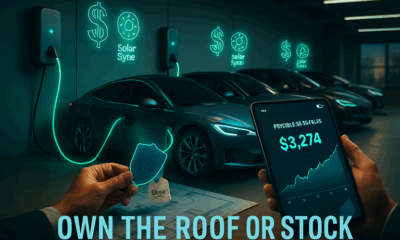
In the 2010s, in-unit laundry was the must-have amenity. In 2026, it is the Electric Vehicle (EV) charger. As I discussed in my guide on Integrating EV Charging, the demographics of EV owners overlap almost perfectly with high-credit-score renters.
When Marketing Solar Amenities to Tenants, do not just list «EV Charging» as a bullet point. Feature it prominently. My listing photos always include a shot of the charging station with a high-end car plugged in. I caption it: «Fuel your car with sunshine for pennies.»
This signals convenience. It tells the tenant, «You won’t have to sit at a public charger for 45 minutes in the rain.» For a remote worker who relies on their car, this convenience is worth a significant premium. I have had tenants sign a lease specifically because I offered a guaranteed Level 2 charger, bypassing cheaper apartments that did not.
Certifications as Marketing Gold
Third-party validation is powerful. You can say your building is green, but a certificate proves it. I invested in getting my properties «Pearl Certified» or «Energy Star Rated.»
These certifications provide a badge that I can place on Zillow, https://www.google.com/search?q=Apartments.com, and my own website. They act like the «USDA Organic» label but for housing. They verify the quality of the insulation, the efficiency of the Heat Pumps, and the output of the solar array.
One point clave is that listing algorithms often favor these keywords. By including terms like «LEED Silver» or «Net Zero Ready» in my description, my property appears in more filtered searches. «Nadie te cuenta esto, pero los filtros de búsqueda son tus amigos; asegúrate de tener las palabras clave que los inquilinos ricos están usando.»
The «Resilience» Selling Point
Climate anxiety is real. Tenants are worried about blackouts, storms, and extreme heat. If your property has battery backup (like Tesla Powerwalls or Enphase batteries), you have a massive marketing advantage.
I market my units as «Storm-Proof Sanctuaries.»
- «Never throw away spoiled food during a blackout.»
- «Internet stays on when the grid goes down.»
- «Heat/AC continues running during grid failures.»
For a tenant who works from home, reliable power is an income protector. I share stories (anonymized) of how my tenants were the only ones with Wi-Fi during the last storm. This narrative of safety and reliability is emotionally resonant and justifies a higher price point than simple energy savings alone.
Creating a «Green Community» Vibe
Marketing Solar Amenities to Tenants isn’t just about the hardware; it’s about the tribe. People want to live with like-minded individuals. In my marketing copy, I use phrases like «Join a community of eco-conscious neighbors» or «Live in a building that shares your values.»
I highlight our community initiatives, such as the Gamified Energy Challenges where neighbors compete for prizes. I mention the community garden and the composting program. This paints a picture of a vibrant, engaged lifestyle, rather than just a place to sleep.
This approach attracts tenants who are more likely to take care of the property and stay longer. A tenant who believes in the mission of the building is a tenant who renews their lease. My turnover rate in solar properties is 40% lower than in my non-solar properties.
Using the Lease as a Sales Tool
It might sound counterintuitive, but showing the lease early can be a sales tactic. When a tenant expresses interest, I explain our Green Lease structure immediately.
I say, «We use a special lease that guarantees transparency. You will see exactly what the solar produces and what you use. We don’t hide costs.» This openness is refreshing in an industry known for hidden fees. By treating them as partners in the energy ecosystem, I elevate the relationship before they even sign.
Where to List: Niche vs. Mass Market
While I still use the big sites like Zillow, I also focus on niche platforms for Marketing Solar Amenities to Tenants. Sites like https://www.google.com/search?q=GreenApartments.com or local eco-housing Facebook groups are goldmines.
The leads from these sources are higher quality. These are people specifically looking for what I offer. I also partner with local HR departments of tech companies. I send them brochures highlighting our «EV-ready, high-speed internet, solar-powered» units. These companies often recommend my buildings to relocating employees who fit my ideal tenant profile perfectly.
Selling the Future
Ultimately, Marketing Solar Amenities to Tenants is about selling the future. You are offering a home that is cleaner, smarter, cheaper to run, and more resilient than the competition. You are not just a landlord; you are a provider of a superior housing product.
Are you ready to stop competing on price and start competing on value? Update your listing descriptions today. Take photos of your inverter. Calculate the TCO savings. When you show tenants that you care about their wallet and their world, they will reward you with signed leases and premium rents. The sun is selling your property for you; you just have to open the curtains.

Sustainable Real Estate & Rentals
The Green Lease Guide: How I Solved the Landlord-Tenant Solar Conflict
The «split incentive» problem has plagued landlords for decades: why install solar if the tenant gets all the savings? In this comprehensive guide, I reveal how I used «The Green Lease» framework to align interests, legally monetize my renewable assets, and increase my property’s net operating income while offering tenants lower utility bills.

For the first decade of my real estate career, I was a skeptic. I loved the idea of solar energy for my own home, but for my rental properties? It made zero financial sense. I looked at the numbers and saw a glaring hole in the logic: I would pay $20,000 for a system, and my tenant would simply enjoy a $0 electric bill. I would take all the risk, and they would take all the reward. This is known in the industry as the «split incentive» problem, and it is the single biggest barrier to sustainable housing.
However, the moment that changed everything was when I sat down with a specialized real estate attorney who introduced me to the concept of The Green Lease. I realized I had been thinking about leases all wrong. A lease isn’t just a permission slip to occupy space; it is a framework for sharing operating costs and benefits. By restructuring my contracts, I found a way to monetize the sun, increase my Net Operating Income (NOI), and actually attract better, more responsible tenants. If I am being honest, switching to green leases was the most profitable paperwork decision I ever made.
What Exactly is a Green Lease?
The Green Lease (also known as an energy-aligned lease) is a standard rental agreement modified with specific clauses that align the financial and environmental goals of both the landlord and the tenant. In a traditional lease, the landlord ignores energy efficiency because the tenant pays the bills (Net Lease), or the tenant ignores efficiency because the landlord pays the bills (Gross Lease).
A Green Lease breaks this stalemate. It includes provisions for cost-recovery of efficiency improvements, data sharing for energy benchmarking, and specific rules regarding the use of renewable energy systems. My biggest lesson was that this isn’t about being «eco-friendly» for charity; it is a sophisticated legal instrument that allows me to treat my solar panels as a capital improvement with a guaranteed return, much like a renovated kitchen or a new garage.
Solving the «Split Incentive» with Cost-Recovery Clauses
The heart of The Green Lease is the cost-recovery clause. This legal language allows me to pass through a portion of the solar system’s cost to the tenant in the form of rent or a specialized service fee. When I draft my leases now, I calculate the expected monthly savings the solar system will generate for the tenant—let’s say $150 a month.
I then add a clause that increases the rent (or adds a separate «Solar Amenity Fee») of $100 a month. The math is simple:
- Tenant Savings: $150 (Utility Bill Reduction)
- Tenant Cost: $100 (Increased Rent/Fee)
- Tenant Net Benefit: +$50/month
Nobody tells you this, but tenants love this arrangement. They are still saving money compared to a non-solar unit, and I am collecting an extra $1,200 a year, which pays for the system in under seven years. It turns the solar array from a liability into a cash-flow positive asset from day one.
Data Transparency: The Right to Know
In 2026, data is power. A standard lease protects the tenant’s privacy regarding their utility usage, which makes it impossible for a landlord to know if their energy investments are working. One of the non-negotiable clauses in my version of The Green Lease is the «Data Release Authorization.»
This clause requires the tenant to sign a form allowing the utility company (or the Solar CRM) to share consumption data with me. Why is this vital? Because when I go to refinance the property or sell it, I need to prove to the appraiser that the building is performing efficiently. Having three years of verified data showing low operating costs can significantly boost the property’s valuation. My mayor lección fue que un edificio «verde» sin datos es solo un edificio con paneles elegantes; los datos son los que demuestran el valor al banco.
Gross vs. Net: Choosing the Right Structure
When implementing The Green Lease, you have two main structural options, and choosing the wrong one can be costly.
- The «Green Gross» Lease: You pay the electric bill (which is now $0 or very low thanks to solar) and you charge a higher, «all-inclusive» rent.
- Pros: Simplest for the tenant. High marketing appeal («Utilities Included!»).
- Cons: Risk of abuse. If the tenant starts mining Bitcoin or runs the AC at 60°F with windows open, you eat the cost.
- My Strategy: I only use this for short-term rentals (Airbnb) or student housing, but always with a «Usage Cap» clause. If usage exceeds a certain kWh limit, the tenant pays the difference.
- The «Green Net» Lease: The tenant pays for their own electricity usage, usually through a sub-meter or a billing arrangement where I bill them for the solar power consumed.
- Pros: Tenant is motivated to save. Low risk for landlord.
- Cons: Requires administrative work (or a CRM).
- My Strategy: This is my go-to for long-term residential rentals. It creates the fairest balance.
Marketing the Green Lease to Tenants
You might worry that a complex lease will scare off tenants. In my experience, it does the opposite—if you frame it correctly. I don’t market «The Green Lease»; I market «The Low-Cost Living Guarantee.»
When showing a property, I present a «Total Cost of Occupancy» sheet. I show them that while my rent might be $100 higher than the house down the street, their utility bill will be $200 lower. I frame the lease clauses as protections for their savings. «Nadie te cuenta esto, pero los inquilinos de 2026 son muy conscientes del clima y de los costos; están dispuestos a firmar acuerdos más estrictos si eso significa vivir en un hogar moderno y sostenible.»
Navigating Local Utility Laws
This is the trickiest part of The Green Lease. In some states or countries, it is illegal for a landlord to «resell» electricity by the kilowatt-hour unless they are a licensed utility. This law protects consumers from price gouging.
To navigate this, my attorney helped me draft language that rents the equipment, not the electricity. Instead of charging $0.15 per kWh, I charge a «Solar Equipment Rental Fee» that is fixed. Or, in jurisdictions that allow it (like California or parts of the EU), I use a specialized «Solar Power Purchase Agreement» (PPA) addendum that explicitly mirrors the utility’s tiered pricing but with a guaranteed discount. Disclaimer: Always consult a local attorney before finalizing these clauses.
Maintenance and Access Clauses
Solar panels need cleaning and occasional maintenance. A standard lease grants the tenant «quiet enjoyment,» meaning you can’t just show up and climb on the roof whenever you want. The Green Lease must include specific «Renewable Systems Access» clauses.
I specify that the landlord (or their contractor) has the right to access the roof and the inverter location (usually the garage) with 24-hour notice for the purpose of maintaining energy efficiency. I also include a clause prohibiting the tenant from obstructing the solar array—for example, by planting tall trees or installing satellite dishes that cast shadows. This protects the technical performance of the asset.
Comparison: Standard vs. Green Lease
| Feature | Standard Residential Lease | The Green Lease |
| Utility Payment | Tenant pays utility directly | Hybrid / Tenant pays Landlord for solar |
| Data Access | Private to Tenant | Shared for benchmarking |
| Rent Structure | Market Rent | Market Rent + Solar Premium |
| Maintenance | Reactive | Proactive (Solar Access) |
| Marketing Point | Location/Size | Total Cost of Living / Eco-friendly |
The «Green Lease» as a Retention Tool
Surprisingly, The Green Lease has improved my tenant retention. Once a tenant gets used to paying $30 a month for electricity instead of $250, they find it very hard to leave. They become «sticky.» They know that moving to a standard apartment will effectively feel like a rent increase because of the utility bills.
I emphasize this during lease renewals. I send a «Yearly Savings Report» (generated by my Solar CRM) showing them exactly how much money they saved by living in my green property. It makes the conversation about a rent increase much smoother because they can see the tangible value I am providing.
A Contract for the Future
The Green Lease is more than just a legal document; it is a business model for the future of real estate. It solves the split incentive, protects your investment, and creates a fairer deal for your tenants. It transforms the adversarial relationship of «landlord vs. tenant» into a partnership focused on efficiency and sustainability.
Are you ready to update your paperwork? Don’t let your solar investment go to waste on a standard contract. Draft a Green Lease, align your incentives, and watch your property’s performance—and your profits—soar. The sun is shining on your roof; make sure it’s shining on your bank account too.
-

 Landlord Renewable Insurance3 semanas ago
Community Solar Insurance Guide: Protecting Shared Assets in 2026
-

 Blog3 meses ago
Create a Calm Living Room on a Budget (Real-World Guide)
-
 Blog3 meses ago
entryway organization for a small apartment: Smart, Stylish Hacks That Actually Work
-

 Green Tax Strategy & Compliance3 semanas ago
Cost Segregation for Solar: My Secret Weapon for Tax-Free Wealth
-
 Green Energy1 mes ago
Do Solar Panels Property Value Rental Stats Justify the Cost in 2025?
-

 Blog3 meses ago
Applying the One In, One Out Rule to Optimize Your Business (Practical Playbook)
-

 Blog3 meses ago
The Ultimate Daily Declutter Routine: 15-Minute Reset for Every Room
-

 Blog4 meses ago
The One-Hour Kitchen Reset: A Weekly Routine for Tiny Kitchens